

Our Science
OVERVIEW
Robust, quality science is the cornerstone of progress and understanding for Tobacco Harm Reduction (THR). By relying on empirical evidence, reproducible results, and unbiased methodologies, our world class team of scientists spanning multiple disciplines delivers product submissions to the Food and Drug Administration (FDA), demonstrating submitted products are appropriate for the protection of public health and align with our THR journey. We use a scientific assessment framework to assess emissions, exposure, and risk of our products, when compared to smoking cigarettes. Our framework builds a comprehensive set of scientific evidence and a more holistic picture of our products. We look to understand:
- How the product works.
- How the product may impact an individual.
- How the product may impact a population.
All of this is captured in our 3-step scientific risk assessment framework.
A Weight of Evidence Approach to Assess Risk
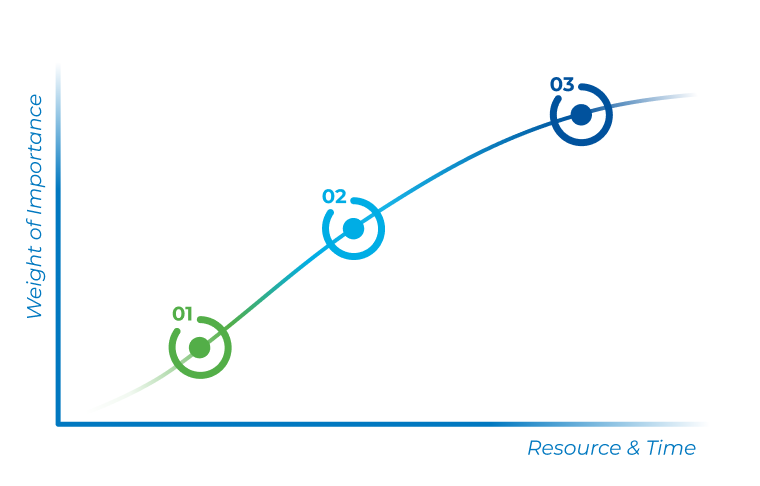
01 – Product Characterization
Product Characterization involves a comprehensive evaluation of product materials, emissions, temperature profiling, aerosol particle size, and toxicological properties to understand potential user exposure. This includes systematic qualification of ingredients and materials and with detailed emissions testing under standardized conditions to identify and measure toxicants. Together, these evidence streams form an integrated assessment of the overall product characteristics.
02 – Individual Risk
Included in this framework are pre-clinical and clinical studies that investigate nicotine uptake and the abuse potential of a product, as well as toxicological assessments to determine whether emissions show reduced activity compared to cigarette smoke. These studies also measure the impact of product use on levels of biomarkers (indicators of what is happening inside the human body at any given moment) of tobacco exposure in blood, urine, and breath.
03 – Population Risk
The final step incorporates studies that examine the effects of product use on adult consumers, as well as the impact on public health. These “big picture” view studies include switching behavior, population modeling, longitudinal and cross-sectional surveys, and patterns of product use among adult consumers. The data generated is essential for measuring and analyzing the impact of tobacco and nicotine products on public health.
Our multi-disciplinary scientific teams work collaboratively as part of this risk assessment framework, delivering a weight of evidence approach to demonstrate a commitment to Tobacco Harm Reduction through reduced-risk products.